
IMF Warns of Strains on US Economy – Slowing Demand and Weak Job Growth Raise Concerns
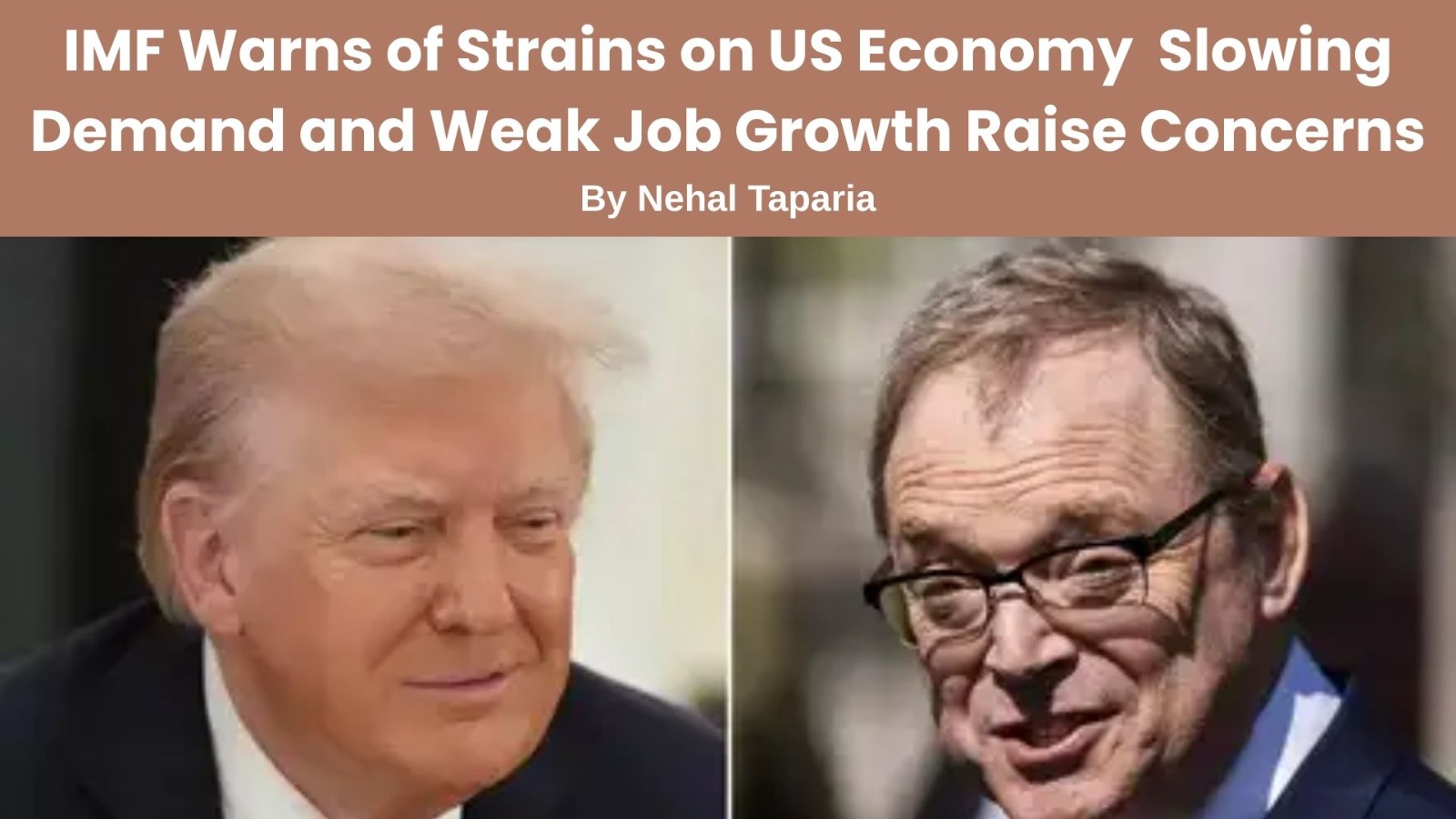
IMF Warns of Strains on US Economy – Slowing Demand and Weak Job Growth Raise Concerns
The International Monetary Fund (IMF) has issued a cautionary statement regarding the U.S. economy, signaling that it faces significant strains as domestic demand slows and job growth weakens. Once seen as a resilient economic engine, the U.S. economy is now battling headwinds in the form of rising interest rates, inflationary pressures, and global uncertainties.
Key Highlights of the IMF Warning:
Slowing Domestic Demand: Consumer spending, which accounts for a significant portion of the U.S. GDP, is showing signs of weakening. Higher interest rates and inflation are reducing disposable income, discouraging new spending.
Weakening Job Growth: The labor market is cooling, with fewer new jobs being added than expected. This signals a possible slowdown in economic activity and dampens consumer confidence.
Global Ripple Effects: As the U.S. economy is deeply interconnected with global markets, the slowdown raises concerns for international trade and investment flows.
What This Means for the Global Economy:
A weaker U.S. economy reduces demand for imports, impacts global supply chains, and increases financial market volatility. Investors are increasingly wary of riskier assets, seeking safe havens like government bonds and gold.
Impact on Indian Markets
1. Exports Pressure
India’s exports to the U.S., especially in sectors like pharmaceuticals, IT services, and textiles, may face lower demand. U.S. is a major trading partner, and reduced consumption will likely dampen Indian export growth.
2. Capital Flows & Currency Volatility
Global investors tend to reduce exposure to emerging markets during a U.S. slowdown, which may lead to foreign portfolio investors (FPI) pulling money out of Indian equities and bonds. This could weaken the Indian Rupee (INR) against the Dollar and lead to increased volatility in Indian financial markets.
3. Inflationary Pressures in India
A weakening U.S. economy may lower crude oil prices due to decreased global demand. This could ease India’s inflationary pressures, benefiting consumers and the RBI’s policy decisions.
4. Stock Market Reactions
Short-term bearish trends could dominate the Indian stock markets as global risk sentiment deteriorates. Sectors dependent on global demand, like IT and Pharma, may see higher volatility.
Conclusion
The IMF’s warning highlights how interconnected global economies are today. While the U.S. slowdown poses challenges for India, it could also present strategic opportunities, especially in sectors less reliant on external demand. Prudent risk management and a focus on domestic consumption-driven businesses will be key to navigating this uncertain phase.
By Nehal Taparia
This content is for educational and knowledge purposes only and should not be considered as investment or Trading advice. Please consult a certified financial advisor before making any investment or Trading decisions.
Latest Course





Latest posts





Our Recent FAQS
Frequently Asked Question &
Answers Here
Q1: Why is the IMF worried about the U.S. economy now?
The IMF is concerned because domestic consumption is slowing due to high interest rates and inflation, while job creation is weakening. Both factors threaten overall economic growth.
Q2: How does a U.S. slowdown affect India’s exports?
Q3: Will the Indian stock market crash because of this news?
Q4: Could this be good news for India in any way?
Q5: How should investors in India react?
Copyright © By Empirical F&M Academy. Design & Developed by Techno Duniya