
India's Manufacturing PMI Soars to a 17-Year High in August 2025
India's Manufacturing PMI Soars to a 17-Year High in August 2025
A Resounding Industrial Revival
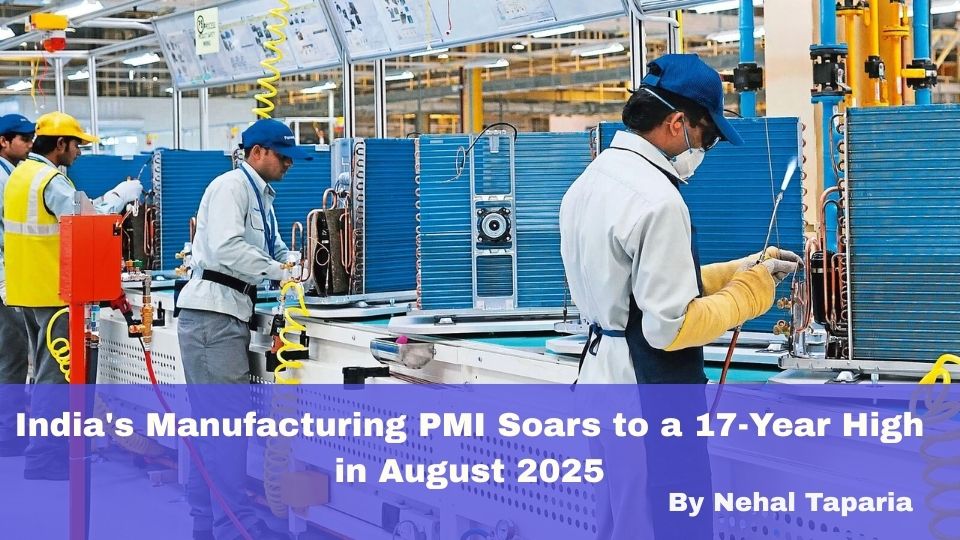
In August 2025, India's manufacturing sector delivered its strongest performance in over 17 years, with the HSBC India Manufacturing PMI surging to 59.3—its highest level since February 2008.
Boosted by robust domestic demand and expanding production, manufacturing output rose 7.7% year-on-year, up from 4.8% in the preceding quarter , . Firms continued to expand inventories, supported by a 16-month high in purchasing activity, and hiring, while slowing, remained in positive territory.
Though new export orders slowed—due partly to steep U.S. tariffs of 50% on Indian textiles, gems, chemicals, and other goods—domestic momentum remained relentless.
What It Means for the Indian Market
Strong Macroeconomic Tailwinds: This industrial revival lends weight to forecasts projecting 6.5% GDP growth in FY26, driven by manufacturing, services, and agriculture.
Market Confidence Booster: The surge is likely to bolster investor sentiment, particularly in capital goods, industrials, and mid-cap sectors—stocks likely to ride the wave of optimism.
Inflation Watch: Rising input and output prices are stoking inflationary pressures , . The RBI may monitor this closely, adjusting monetary policy if needed.
Policy Momentum: Government programs like Make in India and semiconductor manufacturing incentives may gain renewed traction amid the manufacturing upswing .
Cautious Outlook on Exports: Continued export-order moderation, mainly due to aggressive U.S. tariffs, looms as a downside risk—analysts warn it could shave off up to 0.5% from GDP growth, .
Regional Outlier: Amid widespread factory contractions across Asia—Japan, South Korea, Taiwan—India stands out with exceptional performance, albeit vulnerable to trade tensions.
By Nehal Taparia
This content is for educational and knowledge purposes only and should not be considered as investment or Trading advice. Please consult a certified financial advisor before making any investment or Trading decisions.
Latest Course





Latest posts



Our Recent FAQS
Frequently Asked Question &
Answers Here
1. What was the PMI reading for August 2025?
The HSBC India Manufacturing PMI hit 59.3 in August, its highest level since February 2008.
2. What factors fueled this surge?
3. How is manufacturing output growing?
4. What’s happening with export orders?
5. What are the inflationary signals?
6. Is employment growing?
7. How does this PMI relate to GDP growth?
8. What downside risks are there?
9. How does India compare with regional trends?
10. What’s the outlook moving ahead?
Copyright © By Empirical F&M Academy. Design & Developed by Techno Duniya