
US President Trump’s “One Big Beautiful Bill” — What It Means for US & Indian Markets
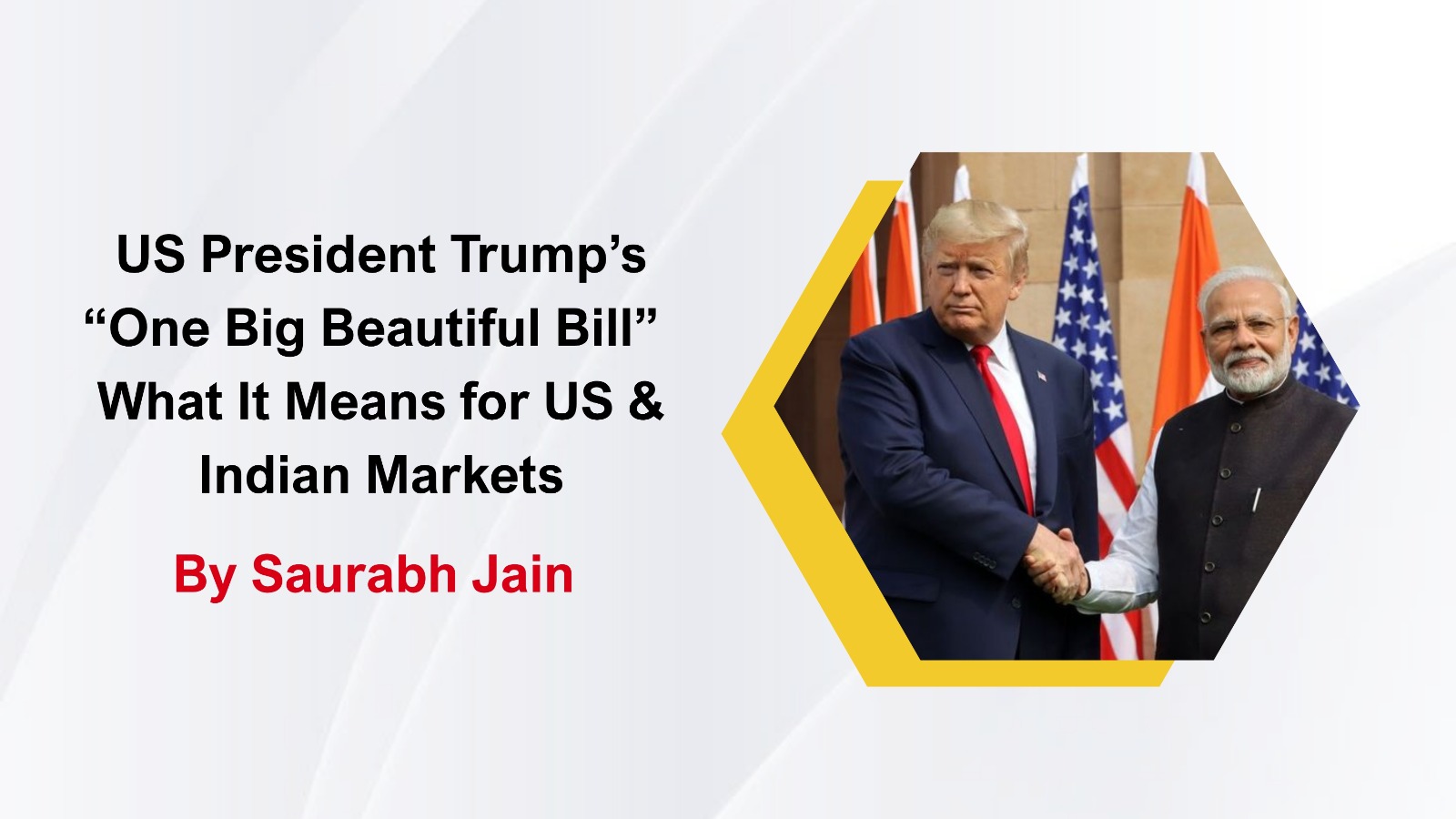
US President Trump’s “One Big Beautiful Bill” — What It Means for US & Indian Markets
In a tightly contested vote of 51-49, the US Senate agreed on Saturday to begin debating President Donald Trump’s sweeping new economic legislation — a package he’s proudly calling the “One Big Beautiful Bill”. This proposed legislation combines massive tax cuts, adjustments to government spending, and enhanced border security measures.
While the bill still faces a rough road ahead in the US legislative process, its potential impact is already stirring conversations in global markets, including India.
Let’s break down what this bill is about, its consequences for the US economy, and why Indian markets are watching it closely.
What’s in the Bill?
The proposed legislation aims to:
Cut taxes across income brackets and corporate rates
Restructure government spending priorities
Fund enhanced border security and infrastructure projects
According to the US Congressional Budget Office (CBO), if passed, the bill could increase the US fiscal deficit by a staggering $3.3 trillion over the next 5–10 years.
Why Does This Matter for India?
Even though this is a domestic US bill, its implications are far-reaching, especially for emerging markets like India. Here’s why:
1️⃣ Global Liquidity Could Tighten
A ballooning US deficit would likely push US Treasury yields higher as the government borrows more. Higher yields make US bonds more attractive to global investors, leading to potential capital outflows from emerging markets, including India.
2️⃣ Dollar Strengthening Impact
If the US dollar strengthens on expectations of higher yields and faster US growth, it would put pressure on the Indian rupee, making imports costlier and increasing inflationary risks in India.
3️⃣ Impact on FII Flows
Foreign Institutional Investors (FIIs) often rebalance portfolios based on global interest rate trends. Rising US yields might trigger a shift of funds from Indian equities to US debt markets, adding volatility to Indian stock indices.
4️⃣ Commodity & Crude Price Volatility
A stronger dollar typically puts pressure on global commodity prices, including crude oil. Since India is a major oil importer, fluctuations in oil prices can directly impact market sectors like automobile, aviation, and paint industries.
How Might the Indian Market React?
Short-term: Expect heightened volatility in sectors sensitive to currency and FII flows. IT and pharma stocks may gain on a weaker rupee.
Medium-term: If US interest rates rise sharply, Indian markets may see sustained foreign fund outflows, pressuring indices.
Long-term: If global growth picks up due to US stimulus, India could benefit from increased trade and investment opportunities.
Final Thoughts
While the proposed US bill is a domestic policy move, its global financial ripple effects are unavoidable. Indian investors should brace for some near-term market swings, especially in sectors linked to currency movements and foreign fund flows.
Stay informed, track global cues, and be ready to adapt your strategy as markets digest this significant development.
By Saurabh Jain
This content is for educational and knowledge purposes only and should not be considered as investment or Trading advice. Please consult a certified financial advisor before making any investment or Trading decisions.
Latest Course





Latest posts





Our Recent FAQS
Frequently Asked Question &
Answers Here
Q1 Why would a US tax bill affect India’s stock market?
Because global markets are interconnected. Any major shift in US fiscal policy affects capital flows, currency valuations, and commodity prices worldwide — all of which impact Indian equities.
Q2 Will this bill cause the rupee to depreciate?
Q3 Which sectors in India could be impacted most?
Q4 Should Indian investors be worried?
Q5 When will the final decision on the bill be known?
Copyright © By Empirical F&M Academy. Design & Developed by Techno Duniya