Mastering the Nifty 50 Index for Day & Intraday Traders
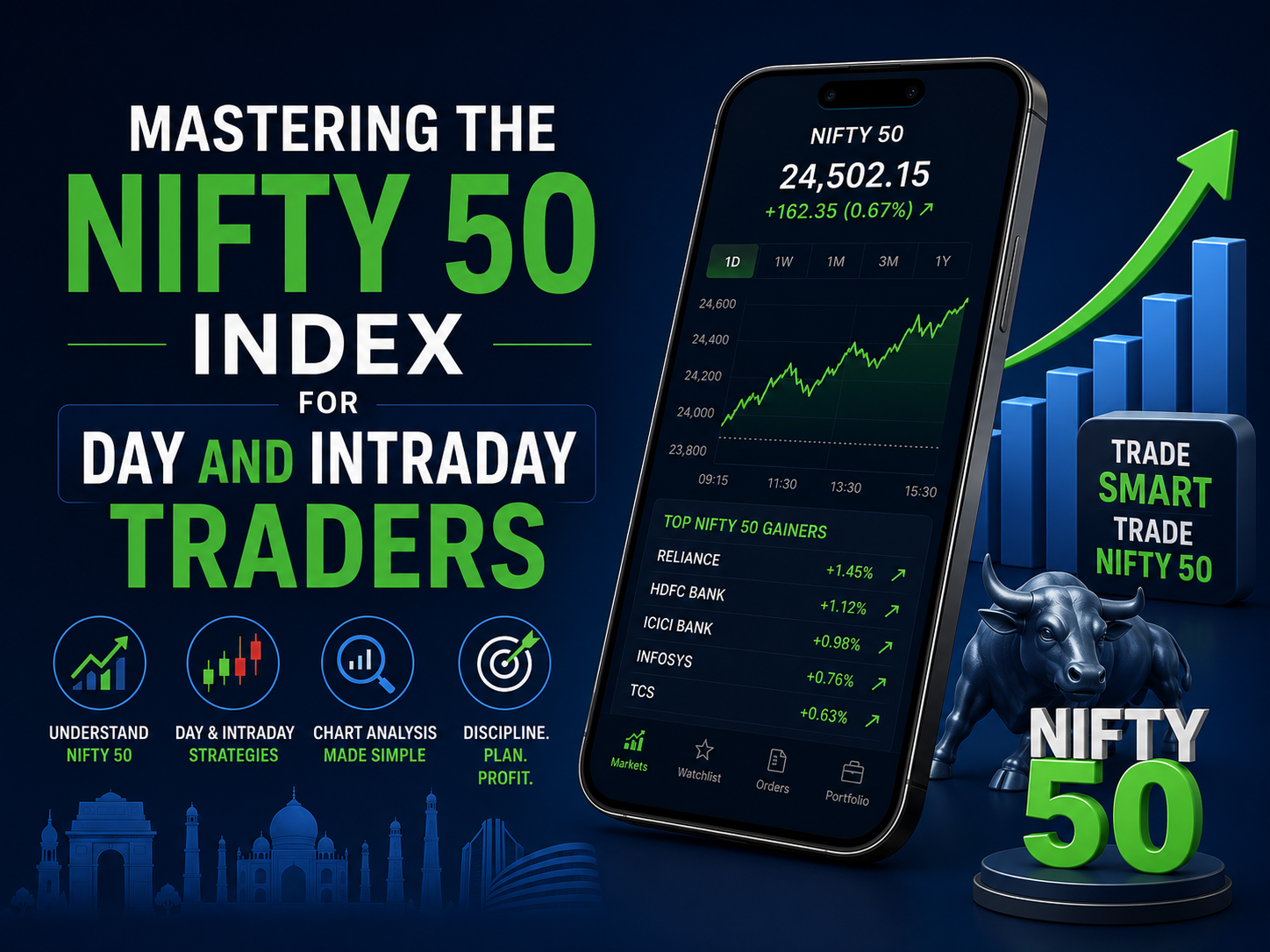
Mastering the Nifty 50 Index for Day and Intraday Traders
The Nifty 50 is one of the most actively traded indices in the Indian stock market, and it plays a central role in intraday trading, swing trading, and options trading alike. For anyone building a consistent trading approach, understanding how the Nifty 50 actually behaves — not just watching it move — can materially improve decision-making and market confidence.
Whether you're just starting out or already trading actively and looking to sharpen your intraday strategy, mastering the Nifty 50 helps you read trend, momentum, and volatility with far more precision.
At Empirical Academy, our training is built around practical technical analysis, price action, and risk management — the exact skill set index trading demands.
What Is the Nifty 50 Index?
The Nifty 50 is the benchmark index of the National Stock Exchange (NSE), representing the top 50 large-cap companies across sectors including:
- Banking
- Information Technology
- Energy
- FMCG
- Automobile
- Pharma
- Financial Services
Because it spans India's largest, most liquid companies, the index is widely treated as a proxy for overall market sentiment. That same liquidity and volatility profile is exactly why it's one of the most preferred instruments for intraday trading, futures trading, options trading, swing trading, and scalping.
Why Day Traders Prefer the Nifty 50
High liquidity. Trading volumes on the Nifty 50 are extremely high, which means traders can enter and exit positions quickly without significant slippage — a critical factor when you're trading intraday and timing matters.
Volatility suited to intraday setups. The index's daily price swings create repeated opportunities for traders to capture short-term moves, rather than waiting days for a setup to play out.
Lower manipulation risk. Unlike thinly traded small-cap stocks, Nifty 50 movements are driven by institutional participation and broad market sentiment, which sharply reduces the risk of operator-driven price manipulation.
A natural fit for options trading. Nifty options remain among the most actively traded derivatives in India, thanks to high liquidity, tight bid-ask spreads, multiple weekly and monthly expiries, and consistent technical behavior that suits structured strategies.
How the Nifty 50 Behaves in Intraday Trading
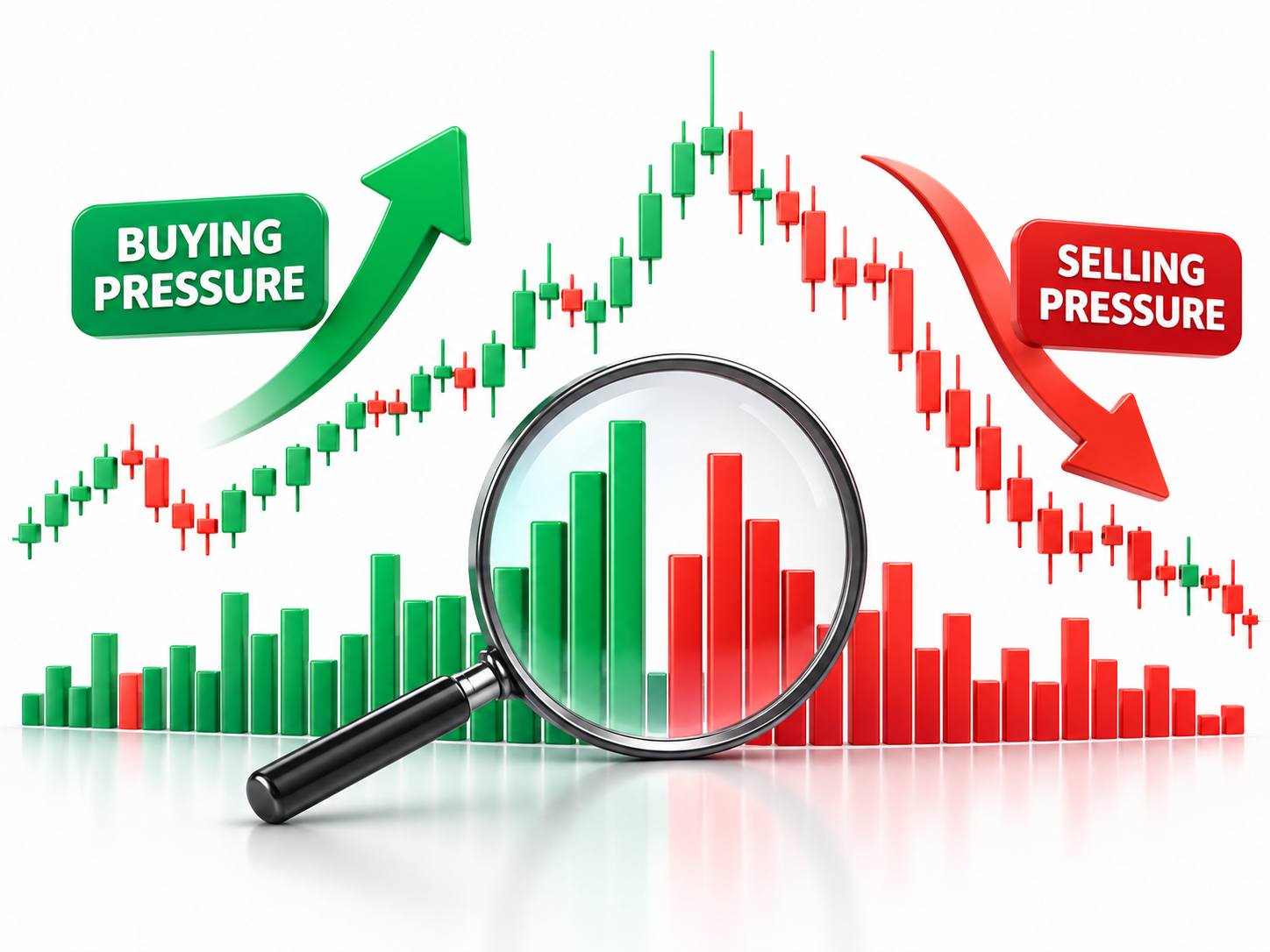
Intraday traders read the Nifty 50 through a combination of tools: technical analysis, support and resistance zones, price action, candlestick patterns, volume analysis, open interest data, and overall market sentiment.
Combining these factors is what lets experienced traders spot breakout opportunities, reversal setups, momentum trades, and trend-continuation entries — rather than reacting to price moves after they've already happened.
Best Technical Indicators for Trading Nifty 50
Exponential Moving Averages (EMA). EMAs help identify trend direction and momentum. Common intraday combinations include the 9 EMA with 20 EMA, and the 20 EMA with 50 EMA — both widely used to confirm trend strength before entering a trade.
MACD. The MACD indicator helps traders spot momentum shifts, potential trend reversals, and buy/sell signals. For a deeper look at how to apply it alongside other momentum tools, see our guide on MACD and Stochastics: Powerful Tools in Technical Analysis.
RSI (Relative Strength Index). RSI highlights overbought and oversold conditions and measures momentum strength. It's most effective when combined with clearly marked support and resistance zones rather than used in isolation.
VWAP (Volume Weighted Average Price). A favorite among professional intraday traders, VWAP helps identify the fair market price for the session, pinpoint institutional buying and selling zones, and gauge how strong a trend continuation is likely to be.
Popular Nifty 50 Intraday Trading Strategies
1. Opening Range Breakout. Mark the first 15-minute trading range, wait for a confirmed breakout, and enter with volume confirmation. This remains one of the most widely used strategies among professional day traders because it filters out early noise.
2. Trend Following. Using moving averages, price action, and the pattern of higher highs and higher lows, traders align their positions with the prevailing trend rather than fighting it.
3. Support and Resistance Trading. This approach focuses on identifying likely reversal zones, breakout levels, and profit-booking areas based on where price has previously reacted.
4. Scalping. Scalpers take multiple quick trades on 1-minute or 5-minute charts, relying on momentum indicators to capture small, fast price movements throughout the session.
Common Mistakes Nifty Traders Should Avoid
- Overtrading — taking too many trades often leads to emotional, reactive decisions rather than planned ones.
- Trading without a stop-loss — skipping this single rule is one of the fastest ways to turn a small loss into a large one.
- Ignoring the broader market trend — fighting the overall direction of the market reduces your probability of success on almost every setup.
- Revenge trading — trying to emotionally recover a loss immediately usually compounds it.
- Trading without a plan — professional traders define entry, exit, and risk parameters before placing a trade, not during it.
Essential Risk Management Rules for Nifty 50 Trading
- Risk only 1–2% of your total capital on any single trade
- Always use a stop-loss order — no exceptions
- Maintain a favorable risk-reward ratio before entering a trade
- Avoid overleveraging your positions
- Trade with discipline, not impulse
Why Learn Nifty Trading Professionally
Most beginner traders don't fail because of bad luck — they fail because they lack structured knowledge, follow random tips instead of a system, ignore risk management, or let emotion drive their decisions.
Learning under experienced mentors helps traders build the things that actually separate consistent traders from the rest: trading psychology, technical analysis skills, the ability to build and stick to a strategy, and market discipline.
Learn Stock Market Trading with Empirical Academy
At Empirical Academy, we offer practical, structured stock market education for beginners and experienced traders alike, covering intraday trading, technical analysis, price action trading, options trading, risk management, swing trading, and trading psychology.
Explore our courses:
- Technical Analysis Course
- Stock Market Courses in Surat
- Intraday Trading Beginner Guide
- Smart Money Concept Trading Guide
The Bottom Line
Mastering the Nifty 50 takes more than watching charts move. Consistent intraday results come from combining technical analysis, disciplined strategy execution, and real risk management — not from chasing every setup that looks promising in the moment.
If you want to build these skills properly, with live market application rather than just theory, explore the practical trading programs at Empirical Academy.
FAQs
Q1. Why is the Nifty 50 significant for day and intraday trading? Because the index aggregates India's most liquid large-cap stocks, its intraday movements closely track broader market sentiment. Traders can use Nifty futures or options to take direct intraday positions on that sentiment.
Q2. Do I need special knowledge to trade Nifty 50 futures or options? Yes. A futures and options trading course helps you understand contract specifications, margin requirements, options Greeks, rollovers, and hedging — all essential before trading derivatives live.
Q3. Can I learn to trade Nifty 50 intraday using technical analysis alone? Yes. A structured technical analysis program or live intraday trading classes can teach you chart patterns, indicator use, and real-time decision-making without needing to start with derivatives.
Q4. What are the benefits of an intraday trading certification course? A certification validates your knowledge, provides structured training and risk management discipline, and builds the confidence needed to trade in live market conditions rather than on guesswork.
Q5. Which courses are best for someone who wants to trade Nifty 50 intraday or via derivatives? Look for a combination of: technical analysis (for chart reading and momentum), futures and options (for using index derivatives), live classes (for real-time practice), and certification (for structured, credentialed learning).
Latest Course





Latest posts




Our Recent FAQS
Frequently Asked Question &
Answers Here
Q1. Why is Nifty 50 significant for day trading and intraday trading?
Because the index aggregates the top liquid stocks, its intraday movements often reflect the broad market sentiment. Traders can use futures or options on the the index to take intraday positions.
Q2. Do I need special knowledge to trade index futures or options on Nifty 50?
Yes. A futures trading course or F&O trading course (or even an advance F & O trading strategies course) helps you understand contract specifications, margin, Greeks, rollovers, and hedging
Q3. Can I learn to trade Nifty 50 intraday using technical analysis?
Absolutely. Enrolling in a technical analysis program or attending live intraday trading classes helps you learn chart patterns, indicators and real-time decision making.
Q4. What are the benefits of an intraday trading certification course?
A certification helps validate your knowledge, gives you structured training, risk management discipline, and confidence to trade in live market conditions.
Q5. Which courses are recommended for someone wanting to trade Nifty 50 intraday or derivatives?
Consider courses that combine:
1. Technical analysis (for chart reading and momentum)
2. Futures and options (for using index futures or option strategies)
3. Live classes (so you can practise in real time)
4. Certification (to ensure you have a structured curriculum and credentials)
Copyright © By Empirical F&M Academy. Design & Developed by Techno Duniya