How to Become a Stock Market Trader in India

How to Become a Stock Market Trader in India
To become a stock market trader in India, you need to open a Demat and trading account, build a foundation in financial and market basics, learn technical and fundamental analysis, practice with a demo or small capital, choose a trading style that fits your personality, and follow strict risk management before trading with real, significant capital.
Trading is not a shortcut to quick money. It's a skill-based profession that combines market knowledge, discipline, and risk control. This guide walks you through the exact steps, in order, to go from a complete beginner to a functioning trader.
Step 1: Understand What Trading Actually Involves
Before opening any account, understand the difference between trading and investing:
- Investing means holding assets for years to benefit from long-term growth.
- Trading means buying and selling more frequently — intraday, swing (days to weeks), or positional (weeks to months) — to profit from shorter price movements.
Trading requires more active screen time, faster decisions, and stronger risk discipline than long-term investing. Be honest with yourself about the time and temperament this requires before committing capital.
Step 2: Open a Demat and Trading Account
You need two linked accounts to trade Indian markets:
- Demat account — holds your shares electronically.
- Trading account — used to place buy/sell orders on exchanges like NSE and BSE.
To open these, you'll need PAN, Aadhaar, a bank account, and basic KYC documents. Choose a SEBI-registered broker with low brokerage, a reliable trading app, and good customer support.
Step 3: Learn the Fundamentals of the Stock Market
Before risking any capital, build a base understanding of:
- How stock exchanges (NSE, BSE) work
- How orders are placed, executed, and settled
- Key terms: market cap, P/E ratio, dividend, circuit limits, F&O, index
- How Nifty and Sensex are constructed and why they move
Structured learning at this stage saves you from expensive mistakes later. Our Finance 101 and foundation-level courses cover exactly this groundwork.
Step 4: Learn Technical Analysis
Most active traders rely on charts to time entries and exits. Core skills to build:
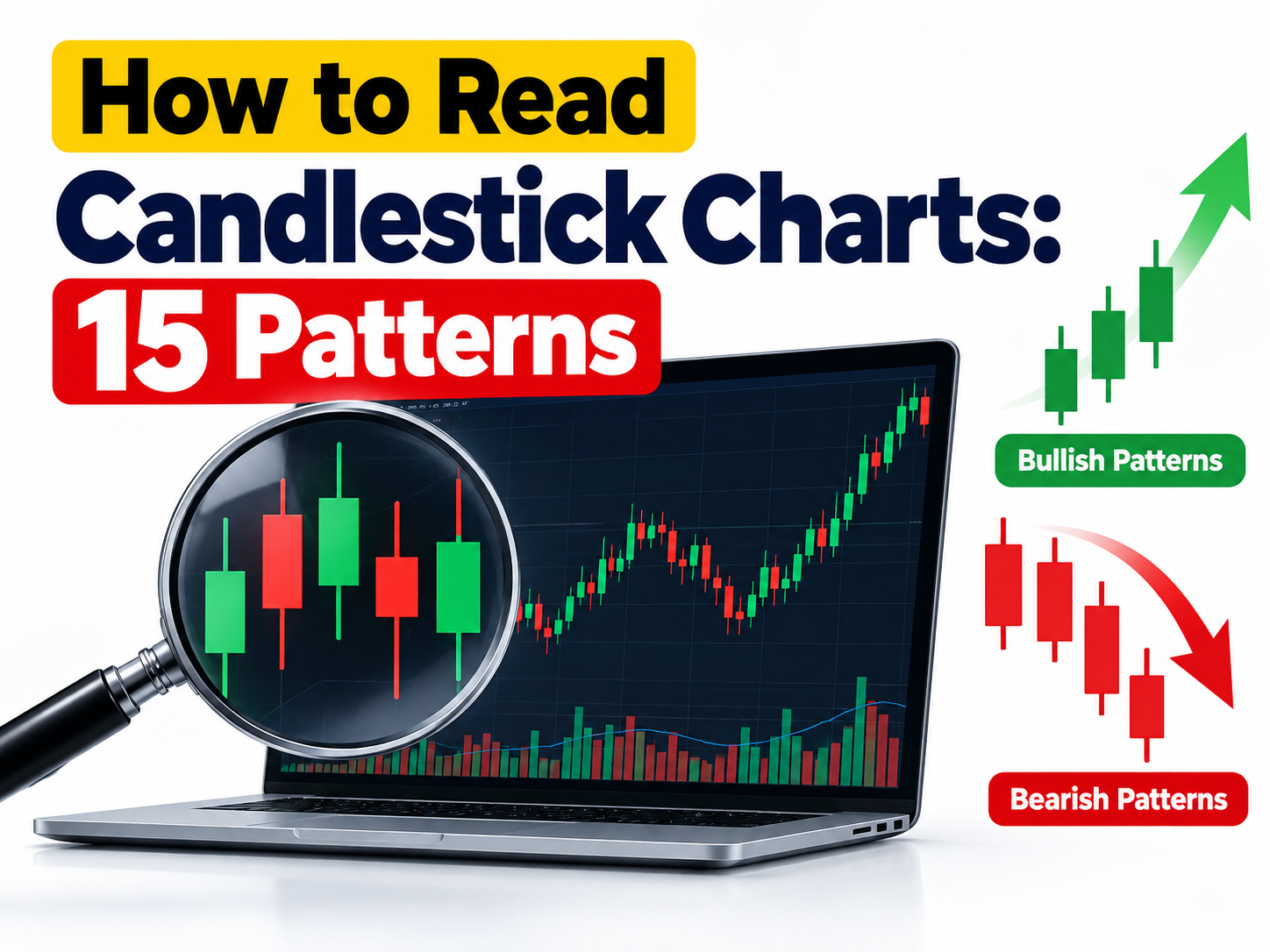
- Candlestick charts and patterns — read our guide on How to Read Candlestick Charts: 15 Patterns
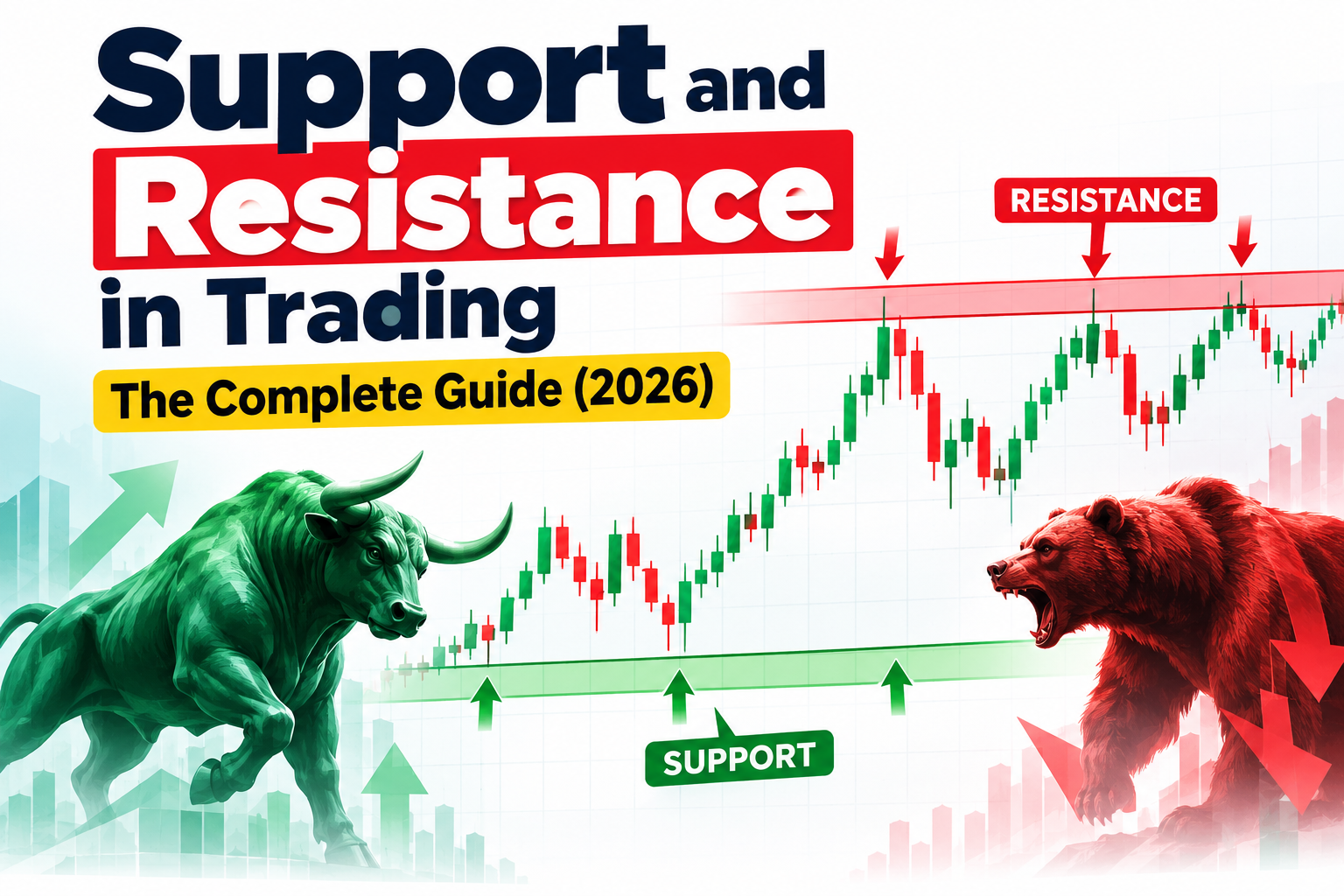
- Support and resistance — understand where price is likely to reverse or break; see Support and Resistance in Trading
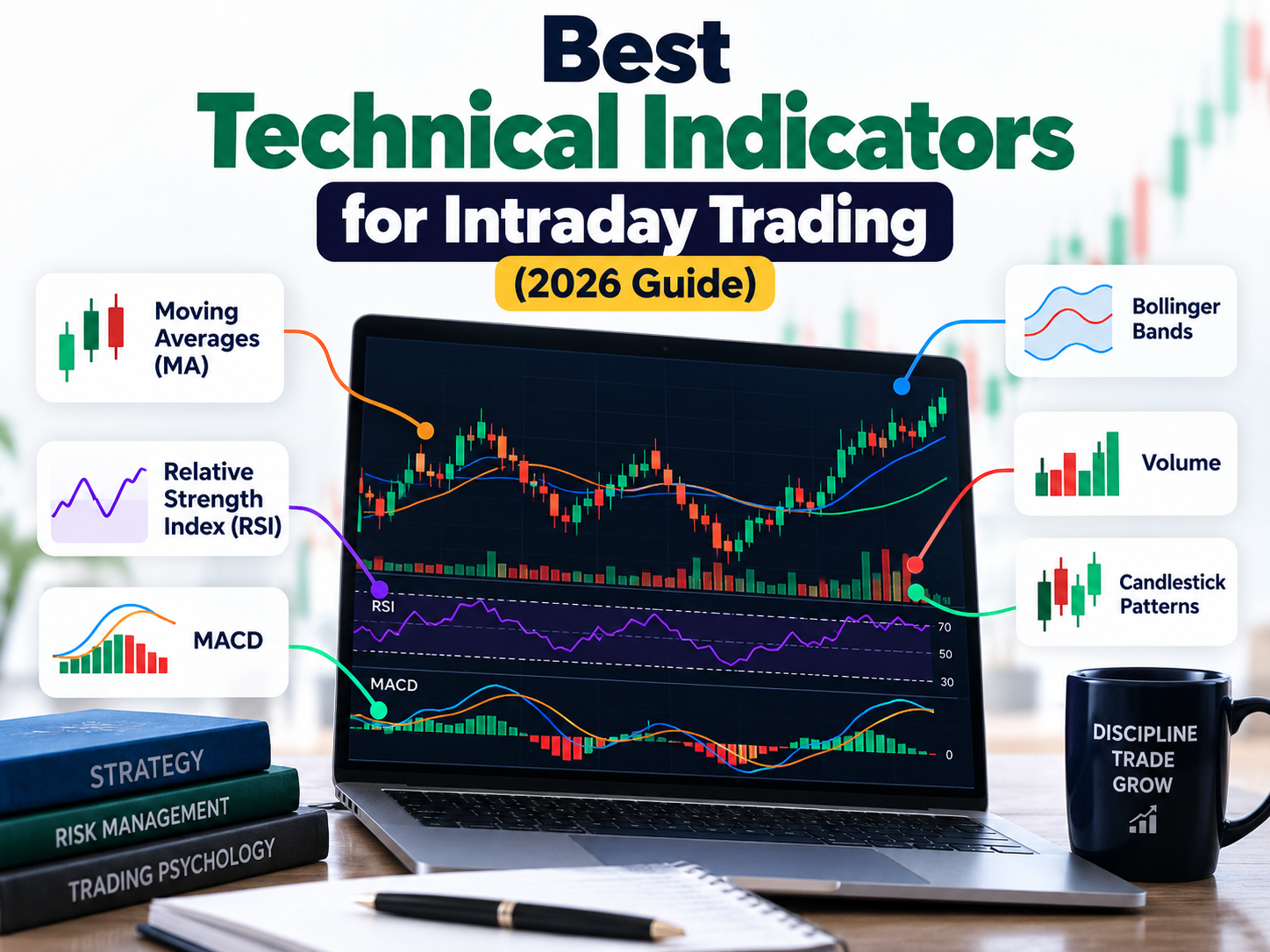
- Indicators like RSI, MACD, and moving averages — covered in Best Technical Indicators for Intraday Trading (2026 Guide)
- Trend identification — higher highs/higher lows vs. lower highs/lower lows
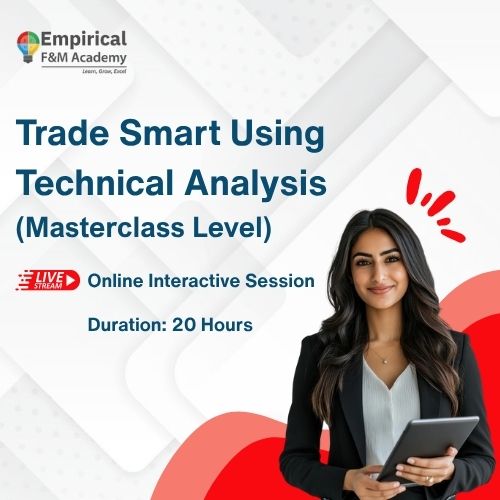
To learn this in a structured, guided format, explore Trade Smart Using Technical Analysis, available in both English and Hindi.
Step 5: Learn Fundamental Analysis (Even If You Trade Short-Term)
Even short-term traders benefit from understanding a company's financial health, sector trends, and macroeconomic factors like RBI policy and inflation data, since these often drive the higher price moves technical charts react to. Our Fundamental Analysis course builds this skill from the ground up.
Step 6: Choose Your Trading Style
Different styles suit different lifestyles and risk appetites:
| Style | Holding Period | Time Commitment | Best For |
|---|---|---|---|
| Intraday | Minutes to hours (same day) | High, needs full market hours | Fast decision-makers, full-time traders |
| Swing Trading | Few days to weeks | Moderate | Those with a day job |
| Positional | Weeks to months | Low to moderate | Trend-followers, part-time traders |
| F&O Trading | Varies, leverage-based | Moderate to high | Traders comfortable with derivatives |
If you're drawn to fast-paced trading, the Best Intraday Trading Course Online and Nifty & Bank Nifty Trading Strategies & Methods are strong starting points.
Step 7: Learn Risk Management Before You Trade Live
This is the step most beginners skip — and the main reason most new traders lose money. Before placing real trades, understand:
- Position sizing based on risk, not gut feel
- Setting a stop loss before every trade
- Risking only 1–2% of capital per trade
- Maintaining a minimum 1:2 risk-reward ratio
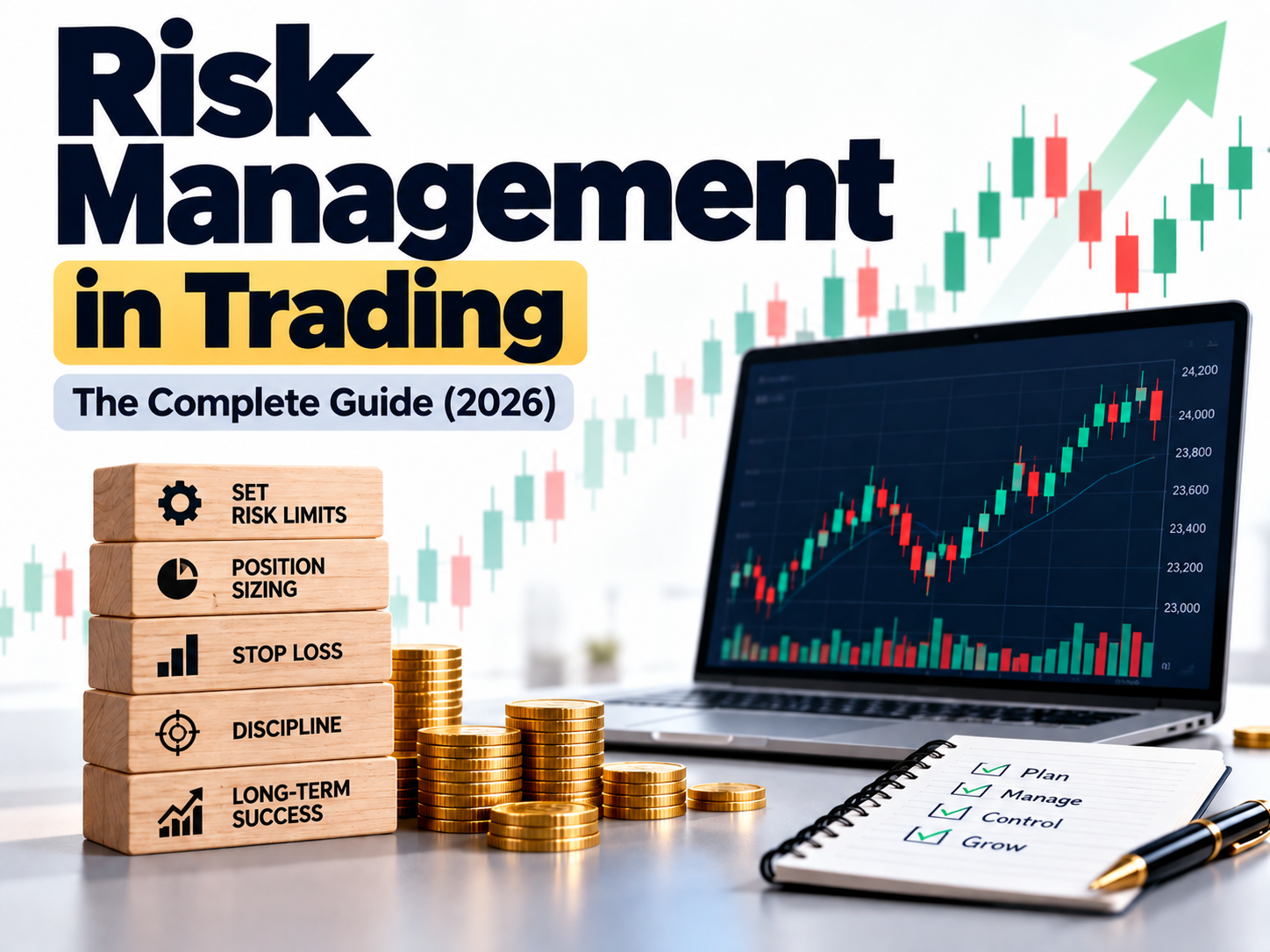
Read our detailed guide on Risk Management in Trading before you place your first live order.
Step 8: Practice with a Demo Account or Small Capital
- Use a paper trading or demo account to test strategies without financial risk.
- Once comfortable, start live with a small amount of capital you're fully prepared to lose while learning.
- Track every trade in a journal: entry, exit, reasoning, and outcome.
Step 9: Build a Trading Plan
A trading plan should define, in writing, before you trade:
- Which markets/instruments you'll trade (stocks, F&O, index)
- Your trading style (intraday, swing, positional)
- Entry and exit criteria
- Risk per trade and daily/weekly loss limits
- Rules for when you will NOT trade (news events, high volatility, low conviction)
Trading without a plan is one of the fastest ways to lose consistently.
Step 10: Get Structured, Practical Training
Self-learning through YouTube and free articles can only take you so far. Structured, mentor-led courses accelerate the learning curve significantly by combining theory with live market application. Empirical F&M Academy offers a complete pathway:
- Trade Smart Using Technical Analysis — chart reading, patterns, support/resistance
- Fundamental Analysis — valuing companies and sectors
- Trade Smart Using Futures and Options (Basic) — derivatives trading
- Best Intraday Trading Course Online — intraday-specific strategies
- Asset & Portfolio Management with Value Investing — for a long-term, portfolio approach
Browse the complete list of programs on the Empirical F&M Academy course page.
Skills You Need to Become a Successful Trader
- Analytical skills — reading charts and financial data
- Discipline — following your plan even when emotions say otherwise
- Patience — waiting for high-quality setups instead of forcing trades
- Risk awareness — always knowing your maximum loss before entering
- Continuous learning — markets evolve, and so must your approach
Common Mistakes Beginners Make
- Trading with borrowed or essential money meant for other financial goals.
- Skipping education and jumping straight to live trading.
- No stop loss or risk plan.
- Overtrading, taking too many trades out of impatience or boredom.
- Chasing tips from social media or unverified sources instead of doing independent analysis.
- Ignoring psychology — letting fear and greed drive decisions.
- Expecting quick riches instead of treating trading as a skill built over time.
How Much Capital Do You Need to Start Trading in India?
There's no fixed minimum, but practically:
- You can open a Demat account and start with a few thousand rupees.
- For intraday and F&O, ensure you have enough capital that a full stop loss on any single trade represents only 1–2% of your account, not a large chunk of it.
- Never start with money you cannot afford to lose while learning.
Frequently Asked Questions (FAQs)
Q1. How do I become a stock market trader in India?
Open a Demat and trading account with a SEBI-registered broker, learn market fundamentals and technical analysis, practice with a demo account or small capital, and follow strict risk management before trading with significant funds.
Q2. Is any qualification required to become a trader in India?
No formal degree is legally required to trade in the Indian stock market. However, structured education in technical analysis, fundamental analysis, and risk management significantly improves your chances of long-term success.
Q3. How much money do I need to start trading in India?
You can technically start with a few thousand rupees, but the right amount depends on your risk per trade. A good rule is to only trade with capital you can afford to lose while you're still learning.
Q4. Can I become a full-time trader in India?
Yes, but it typically takes months to years of consistent practice, education, and disciplined risk management before trading can reliably replace a full-time income. Most successful traders start part-time and transition gradually.
Q5. Which is better for beginners: intraday or swing trading?
Swing trading is often easier for beginners since it requires less constant screen time and allows more time to analyze setups, compared to the fast decision-making intraday trading demands.
Q6. Do I need to learn technical analysis to become a trader?
Yes, technical analysis is essential for most trading styles since it helps you identify entry points, exit points, and risk levels using price charts and patterns.
Q7. What is the best way to learn stock trading in India?
A combination of structured courses, consistent practice on a demo account, and gradual live trading with small capital and strict risk management is generally the most effective path.
Key Takeaways
- Becoming a trader is a step-by-step process: account setup → education → practice → risk management → live trading.
- Technical and fundamental analysis are both valuable, even for short-term traders.
- Risk management is non-negotiable — most traders fail without it, not because of bad strategies.
- Structured, mentor-led learning accelerates your progress far more than trial and error alone.
- Start small, track your trades, and scale capital only as your consistency improves.
Start Your Trading Journey with Empirical F&M Academy
Becoming a confident, consistent trader starts with the right foundation. At Empirical F&M Academy, certified trainers guide you through live, practical sessions covering technical analysis, fundamental analysis, futures & options, and risk management.
- Explore the full range of programs at Empirical F&M Academy
- New to charts? Start with Trade Smart Using Technical Analysis
- Interested in derivatives? Begin with Trade Smart Using Futures and Options (Basic)
- Questions before enrolling? Contact our team
Disclaimer: This article is for educational purposes only and is not investment advice. Trading and investing in securities involves risk, including loss of capital. Please consult a SEBI-registered advisor before making financial decisions.
Latest Course

Latest posts

Copyright © By Empirical F&M Academy. Design & Developed by Techno Duniya