
Blog List

Blog List

Can Governments Stop You From Buying Gold? A Complete Guide
Gold has always been deeply connected to Indian culture, savings, and financial security. From weddings and festivals to long-term wealth preservation, Indian households have trusted gold for generations. Recently, Prime Minister Narendra Modi requested Indians to reduce gold buying for one year in order to help manage the country’s rising import bill. While the intention may have been economic stability, history clearly shows that governments have never been fully successful in stopping people from buying gold.

How to Start Intraday Trading in 2026: A Beginner’s Step-by-Step Guide
Intraday trading has become one of the fastest-growing ways to participate in the stock market in 2026. With mobile trading apps, AI-powered charting tools, and easy market access, more beginners are exploring day trading to generate short-term profits.
But here’s the reality: intraday trading is not about luck or random stock tips. Successful traders focus on discipline, risk management, and proper market understanding.

Option Trading for Beginners: Step-by-Step Guide (2026)
Option trading has become one of the most popular ways to earn money in the stock market in 2026. With the rise of retail traders in India, many beginners are exploring options trading strategies, derivatives trading, and intraday option trading to generate consistent income.
However, without proper knowledge, option trading can be risky.

Complete Beginner's Guide to Smart Money Concept in Trading
If you are learning trading, you may have heard the term Smart Money Concept (SMC). It is one of the most talked-about strategies in the stock market and forex trading today.
But what exactly does it mean? And how can beginners use it?
In this detailed guide, we will explain everything in simple English:
- What is the Smart Money Concept
- How smart money works in the market
- Important SMC trading concepts
- Smart money trading strategy for beginners
- Advantages and limitations
Let’s get started.

Complete Beginner’s Guide to Fundamental vs Technical Analysis
If you are starting your journey in the stock market, you will often hear two important terms: fundamental analysis and technical analysis. These are the two main methods investors and traders use to study stocks and make decisions.
But beginners often get confused:
- Which one should I learn first?
- Which method is better for beginners?
- Can I use both together?
In this detailed yet simple guide, we will explain everything in an easy-to-understand way.
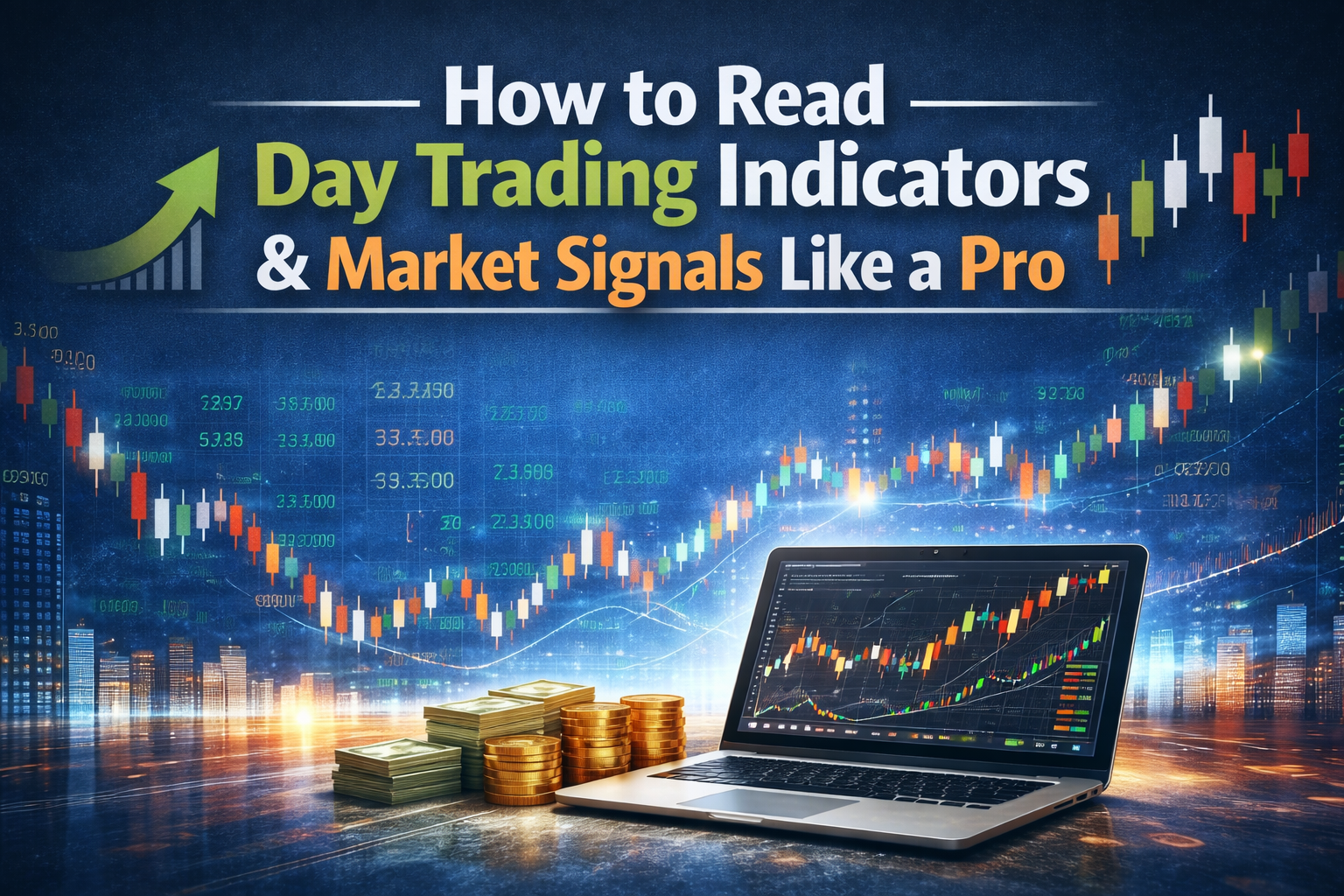
How to Read Day Trading Indicators & Market Signals Like a Pro
If you have spent any time watching the markets on NSE or BSE, you already know that intraday trading is not a game of luck. It is a game of reading the market correctly, timing your entries and exits, and using the right tools to back your decisions. And that is exactly where trading indicators come in.
The best indicators for day trading do not predict the future. What they do is give you a structured, data-driven way to understand price behavior, momentum, and market sentiment in real time. Whether you are trading Nifty 50 stocks, Bank Nifty options, or mid-cap equities, having the right set of technical indicators on your chart can make a massive difference in your results.
In this blog, we are going to break down the most effective trading indicators used by live traders in India and explain how each one fits into a practical intraday trading strategy.

7 Common Intraday Trading Mistakes & How to Avoid Beginner's Guide
Intraday trading looks deceptively simple from the outside. Buy low, sell high, and repeat the entire process. But anyone who's actually sat in front of trading charts with real money on the line knows it's a completely different thing. The trading market moves fast, punishes hesitation, and has a way of making even experienced traders second-guess themselves.

Stock Market Terminology: Top 10 Terms for Beginners
Essential stock market terminology everyone must know. Understand terms like stock market, equity, market price, and stock analysis to start investing confidently.
Latest Course





Copyright © By Empirical F&M Academy. Design & Developed by Techno Duniya