Technical Analysis Course: Syllabus, Fees, Duration and Career Benefits
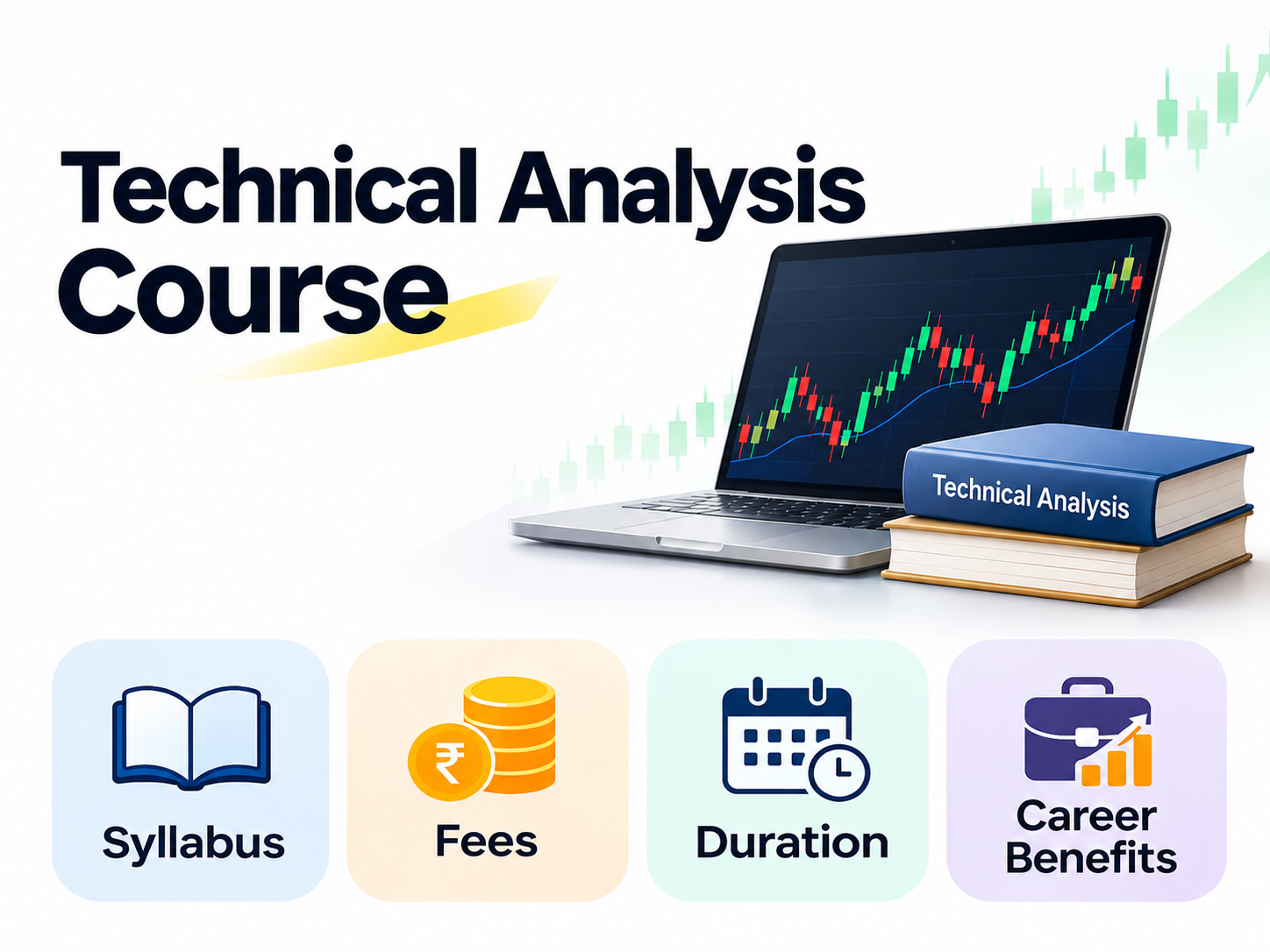
Technical Analysis Course: Syllabus, Fees, Duration and Career Benefits
Empirical F&M Academy structures its technical analysis programs in levels. Here is the syllabus for each one.
Level 1: Technical Analysis Certification Course (Beginner to Intermediate)
The Technical Analysis Certification Course Online covers the core toolkit:
- Introduction to the stock market and technical skills
- Price movement and candlestick patterns
- Charting tools and techniques
- Moving averages and trend indicators
- Support, resistance and breakout strategies
- Volume analysis and price action
- Risk management and position sizing
- Live trading sessions with expert feedback
- Technical analysis for swing trading
- Building a personal trading plan
- Entry and exit timing strategy
- Intraday setup training
The course also includes RSI, MACD, and Bollinger Bands training, plus TradingView charting tutorials for hands-on practice.
Level 2: Technical Analysis (Advanced Level)
The Advanced Level program is built for people who already know the basics. Modules include:
- Market mastery and trading psychology
- Gap theory and volume analysis
- Stop-loss strategies and risk-reward optimization
- Advanced Western chart patterns and emerging price formations
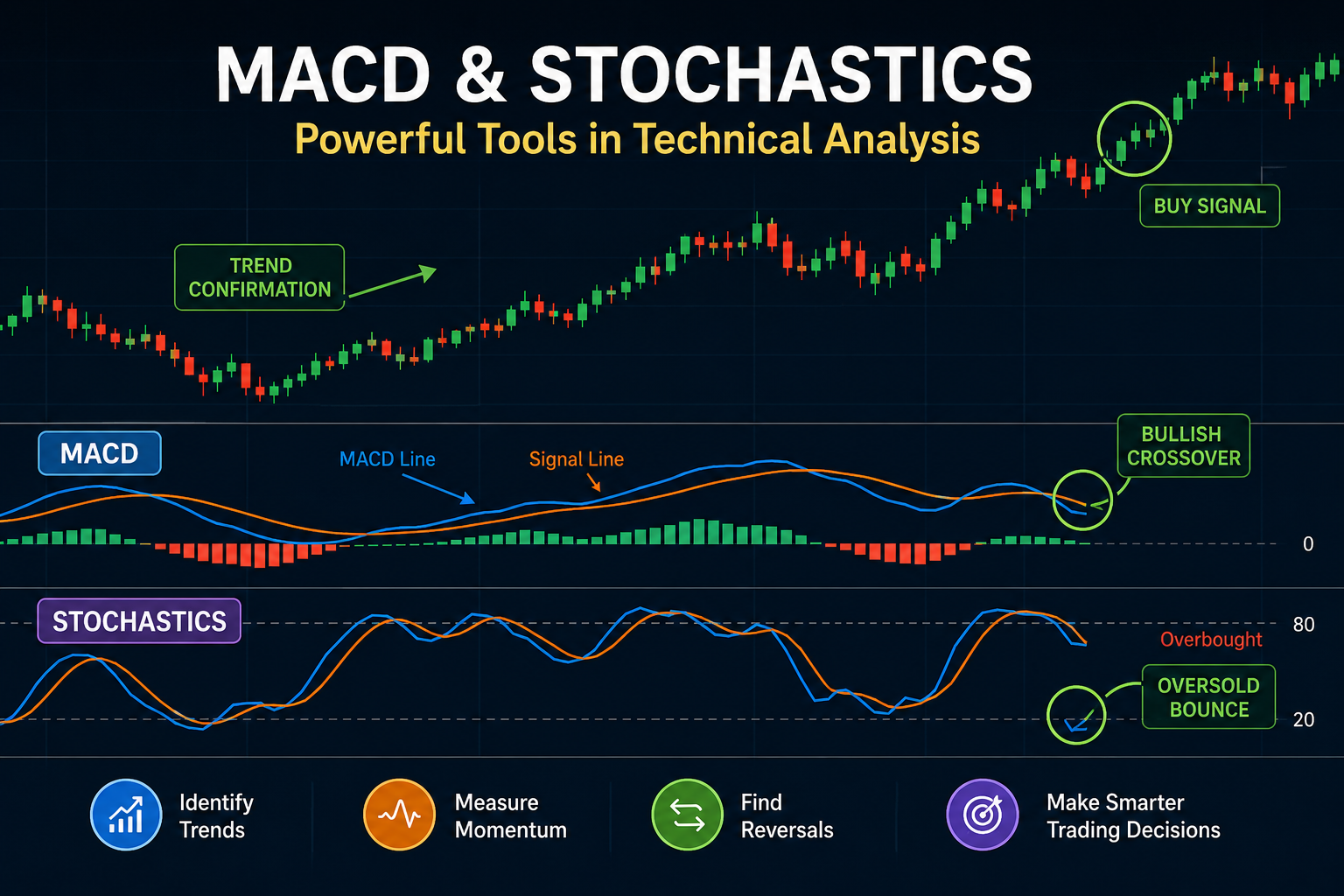
- Bollinger Bands, divergence, MACD histogram, RSI bands, Stochastic and Williams %R
- Exit strategy design and volatility concepts
- Zone analysis (support and resistance mapping)
- Candlestick patterns, Fibonacci retracements and Elliott Wave Theory
- Real-world chart analysis from theory to practice
Level 3: Technical Analysis (Masterclass Level)
The Masterclass Level is an indicator deep dive with real-world case studies:
- Moving averages: SMA, EMA, DEMA, HMA, VWMA
- Oscillators: MACD, Awesome Oscillator, Momentum, Stochastic and Stochastic RSI, Ultimate Oscillator
- Trend indicators: Bollinger Bands, Standard Deviation, Parabolic SAR, Supertrend
- Volume indicators: OBV, Chaikin Oscillator, Volume Oscillator, Accumulation-Distribution Line
- Strength indicators: RSI, ADX, Aroon, ROC, Bull Bear Power, Williams %R, CCI, MFI, ATR, VWAP
Combined path: Foundation + Advanced
The Basic + Advanced program bundles both stages. The foundation part covers technical analysis basics, Dow Theory and pivotal price levels, trendlines and candlesticks, chart formations and moving averages, plus indicators, oscillators and risk governance. The advanced part adds trading psychology, gap theory, volume analysis, stop-loss strategies, risk-reward optimization and advanced chart patterns.
Technical Analysis Course Duration
|
Course level |
Duration |
Format |
|---|---|---|
|
Technical Analysis Certification |
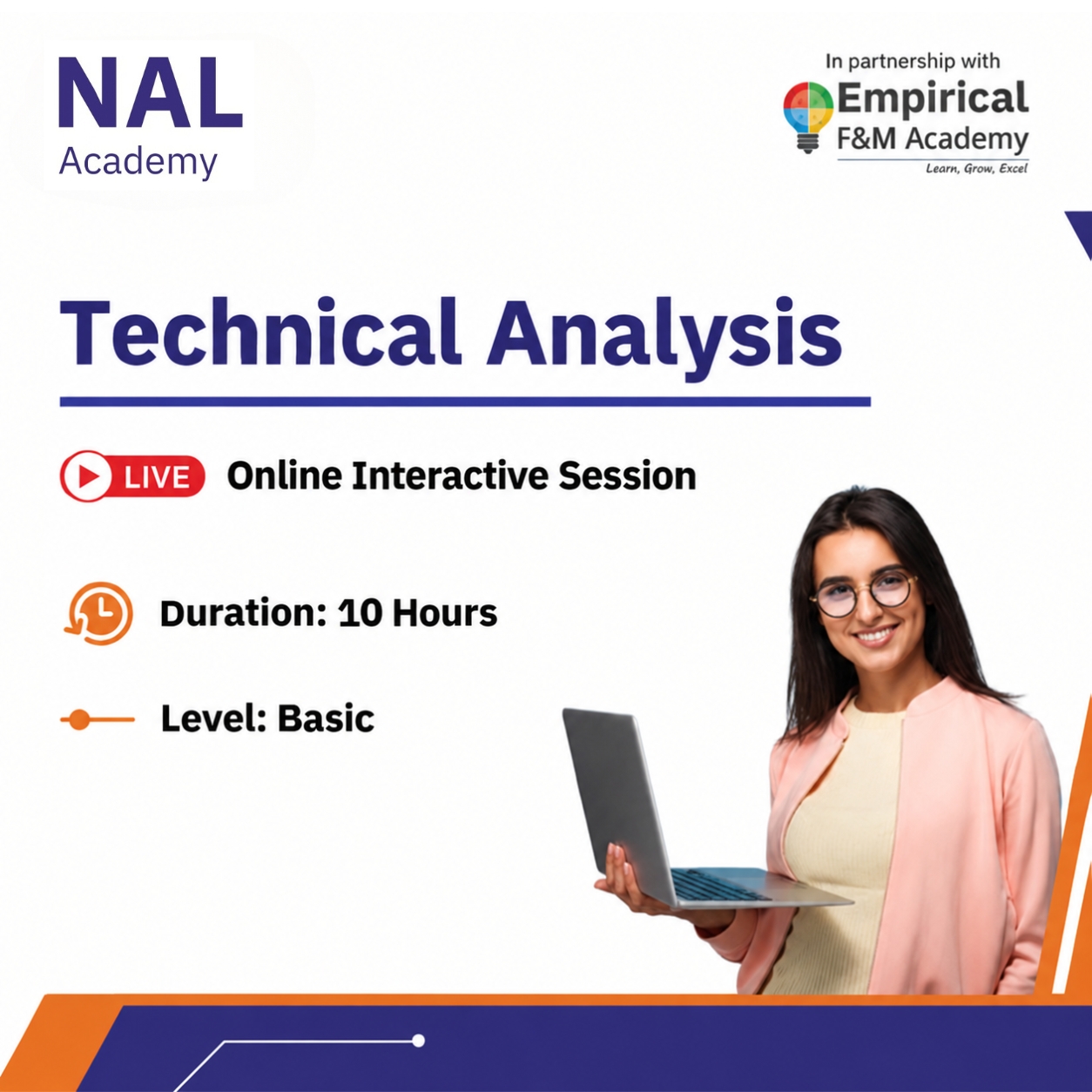
10 hours |
Live, English |
|
Advanced Level |
16 hours |
Online interactive |
|
Masterclass Level |
20 hours |
Online interactive |
|
Basic + Advanced |
26 hours |
Online interactive |
Sessions combine live classes, recorded material, case studies and doubt-clearing. Because you also get lifetime access to recordings, you can revisit any lesson at your own pace.
Technical Analysis Course Fees in India (2026)
|
Course level |
Fees (GST included) |
|---|---|
|
Technical Analysis Certification |
₹11,800 |
|
Advanced Level |
₹17,700 |
|
Masterclass Level |
₹23,600 |
|
Basic + Advanced |
₹27,140 |
Fees are as listed on the course pages at the time of writing. Empirical F&M Academy also mentions EMI options, so confirm current pricing, offers and installment plans before enrolling. You can contact the team here or browse every program on the Empirical F&M Academy homepage.
Is it worth the money? Compare the fee against the cost of one badly managed trade. A structured course that teaches stop-loss placement and position sizing can pay for itself by limiting a handful of avoidable losses. That said, no course guarantees profits, and you should start with small capital or a demo account.
Which Technical Analysis Course Should You Choose?
- Complete beginner or occasional trader: start with the 10-hour Certification course.
- You know candlesticks and indicators but want precision: choose the Advanced Level.
- You want to master every major indicator: pick the Masterclass Level.
- You want one continuous path from basics to advanced: take Basic + Advanced.
- You prefer Hindi: Empirical also lists a Technical Analysis (Hindi) course in its catalog.
If you are still unsure, the academy offers a free demo and consultation, and the course catalog shows every level side by side.
Who Can Enroll? (Eligibility)
No finance degree is required. The programs are designed for:
- Stock market enthusiasts with basic trading knowledge
- Students exploring a stock market analysis course
- Professionals planning a career shift into trading
- Investors and traders who want to sharpen their chart-reading skills
The Advanced and Masterclass levels suit learners who have already covered the basics.
Career Benefits of a Technical Analysis Course
Technical analysis is a practical skill, not a guaranteed job. Here is where it genuinely helps.
- Better trade decisions. You learn to base entries and exits on trend, levels and volume rather than tips or emotion.
- Stronger risk control. Position sizing and stop-loss discipline protect your capital. Read our complete guide to risk management in trading to see how this works.
- A foundation for trading careers. Roles such as equity or derivatives trader, prop trading associate, dealer and market analyst all rely on chart-reading skills. Formal research analyst roles typically need separate regulatory certification, such as NISM, in addition to technical skills.
- Skills that transfer across markets. The same principles apply to equities, Nifty and Bank Nifty, commodities and currencies.
- A path to independent trading. Many learners use the skill to trade or invest their own capital with a defined plan.
- A recognized certificate. You receive a certificate from Empirical F&M Academy, which adds credibility to your resume or profile.
- A community and mentors. The online community lets you learn alongside peers and instructors long after class ends.
Trading involves risk, and results vary. This content is educational and is not investment advice.
Key Concepts Every Technical Analysis Course Should Teach
Whatever institute you choose, check that the syllabus covers these essentials. Each links to a deeper guide on our blog:
- Support and resistance, the levels where price tends to pause or reverse
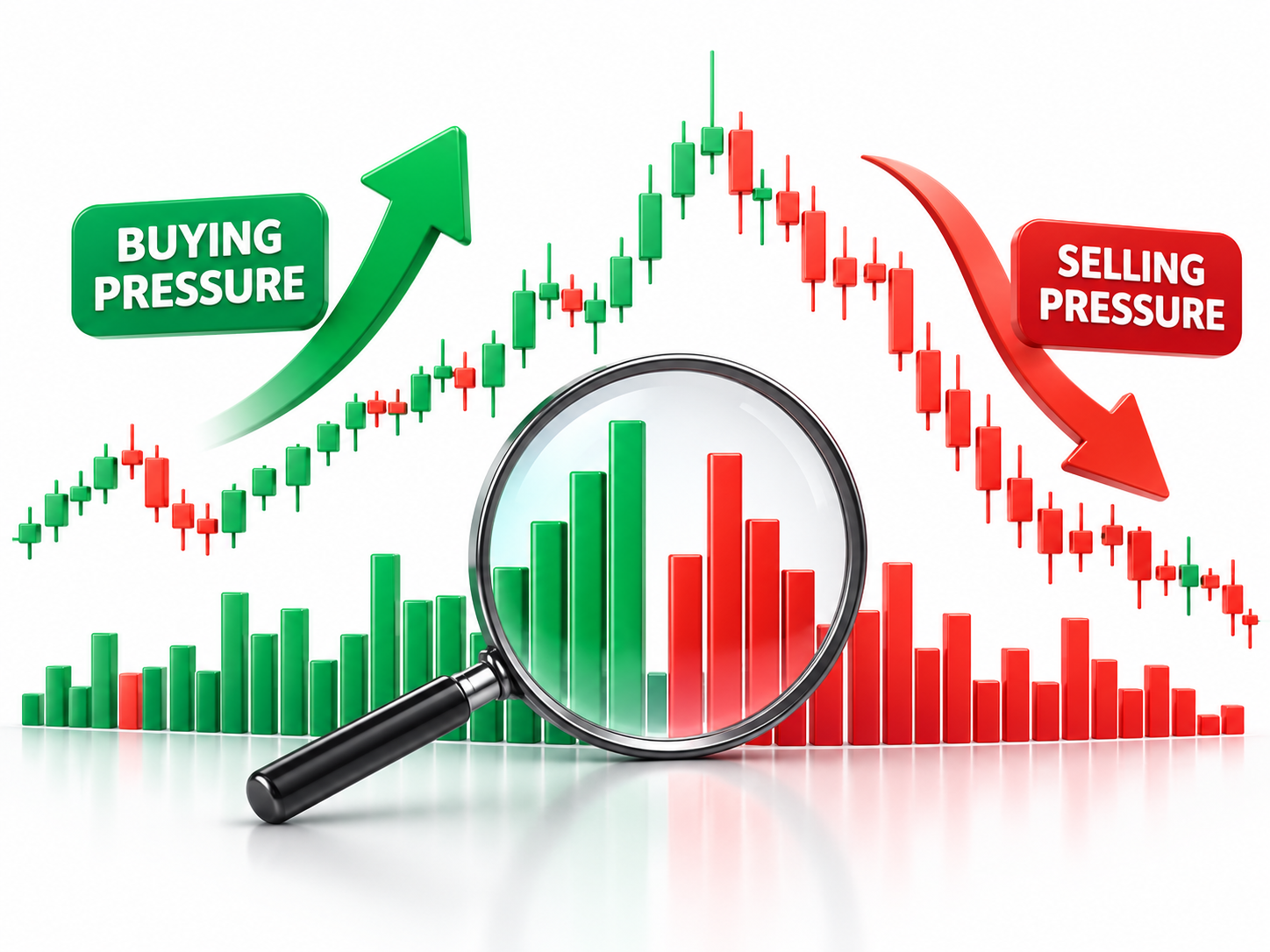
- Volume analysis, to confirm whether buying or selling pressure is real
- Price action, reading candlesticks and trend structure directly
- Technical indicators, used to confirm rather than replace your read of price
- Bank Nifty strategies, applying chart skills to India's most traded index
For more explainers, browse the full Empirical Academy blog.
What Makes Empirical F&M Academy Different?
- Experienced faculty: instructors include CA, CFA, FRM, MBA and Ph.D. holders with corporate experience.
- Practical focus: live sessions, trading simulations, TradingView practice and real market case studies.
- Flexible learning: live and recorded options with lifetime access to recordings.
- Scale: the academy reports training 50,000+ participants.
- Progressive levels: a clear path from beginner to masterclass, plus related courses in futures and options, fundamental analysis and intraday trading.
Frequently Asked Questions
Q1. How long does a technical analysis course take?
At Empirical F&M Academy, courses run 10 hours (Certification), 16 hours (Advanced), 20 hours (Masterclass) or 26 hours (Basic + Advanced).
Q2. What is the fee for a technical analysis course?
Listed fees range from ₹11,800 to ₹27,140 including GST, depending on the level. EMI options are mentioned, so ask the team for current pricing.
Q3. Can a beginner join a technical analysis course?
Yes. The Certification course starts from the basics. The Advanced level is better once you understand candlesticks, trends and indicators.
Q4. Will I get a certificate?
Yes. You receive a certificate from Empirical F&M Academy after completing the course.
Q5. Is the course live or recorded?
Both. You can attend live sessions and also use recordings, with lifetime access to recorded content.
Q6. Can I earn a living from technical analysis?
Some traders do, but results depend on skill, discipline, capital and risk management, and losses are common. Treat the course as a skill-building step, not a guarantee of income.
Q7. What is the difference between technical and fundamental analysis?
Technical analysis studies price and volume to time trades. Fundamental analysis studies company financials and valuation to judge what a business is worth. Many investors learn both, and Empirical offers a Fundamental Analysis course as well.
Final Thoughts
Choosing the right technical analysis course comes down to your current level and goals. Start with the 10-hour Certification course if you are new, move to Advanced or Masterclass as your skills grow, or take the combined 26-hour path for a complete journey.
Ready to start? Explore all programs at Empirical F&M Academy, read more trading guides on the Empirical Academy blog, or talk to the team for a free consultation.
Latest Course

Latest posts



Copyright © By Empirical F&M Academy. Design & Developed by Techno Duniya